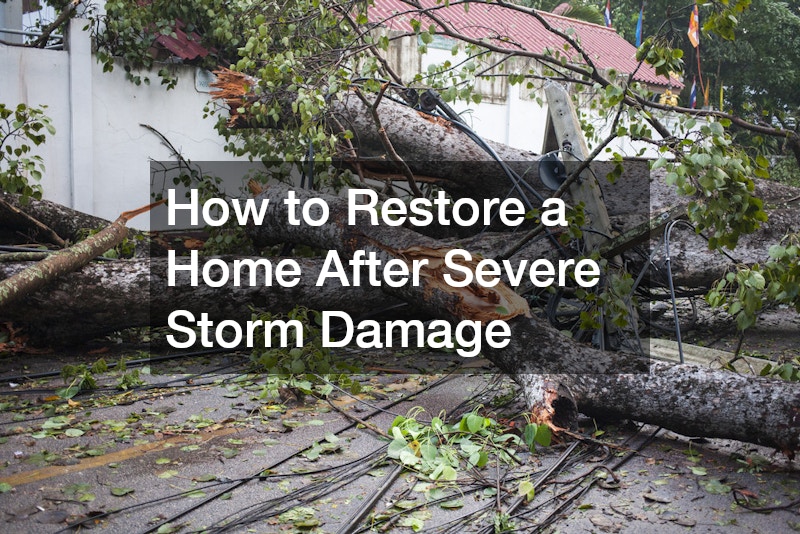
Severe weather has a way of turning an ordinary afternoon into a life-altering crisis in a matter of minutes. When high winds, torrential rain, or severe hail blow through a neighborhood, the aftermath leaves home and property owners standing in a fog of disbelief. Tree limbs litter the lawn, roof shingles sit crumpled on the driveway, and the interior smells of wet drywall and heavy humidity. It is an overwhelming sensation, and knowing where to begin the cleanup process feels almost impossible when damage spans from the attic down to the backyard pool.
Restoring a home after a major storm is not simply a weekend DIY project; it is a complex, multi-phased reconstruction effort. Every system in the structure—from the outer envelope that keeps the weather out, to the environmental health of the air inside, to the outdoor living spaces where your family relaxes—demands a clear, methodical approach. Trying to fix everything at once without a strategic plan usually leads to wasted money, missed hazards, and endless frustration with insurance claims.
To rebuild successfully, you must move forward in deliberate phases. By prioritizing immediate safety, stabilizing structural elements, treating indoor health risks, and systematically restoring the exterior and grounds, you can transform a chaotic situation into an organized recovery. This guide serves as a practical blueprint to help you navigate each step of that journey, ensuring your property is not just repaired, but restored to a safer, stronger state than it was before the clouds rolled in.
Navigating Immediate Hazards and Site Stabilization
Imagine walking up to your driveway just hours after the storm has passed. The sky might be clearing, but the property itself remains an active hazard zone. Your primary task in these initial hours is not to start rebuilding, but to establish control, secure the site, and protect your family from secondary injuries. Before stepping foot inside the structure, observe the perimeter from a safe distance. Look up for sagging rooflines, displaced power lines resting against metal fencing, or large tree branches hanging precariously over living areas. If you smell natural gas or hear a faint hissing sound, do not enter; contact emergency services and your utility provider immediately.
Once you have verified that the structure is physically safe to enter, your attention must shift to immediate property stabilization and documentation. Do not touch or move debris until you have captured extensive photographic and video evidence of every room and every outdoor area. Take wide shots of entire spaces alongside crisp close-ups of specific damaged assets. This photographic record will serve as the backbone of your insurance claim, proving the condition of your home directly after the event.
During this frantic period, aligning with a reputable restoration contractor is the single best decision you can make. A seasoned professional brings an experienced eye to the initial assessment, identifying subtle structural failures that an untrained homeowner would easily miss. They instantly recognize whether a load-bearing wall has been compromised or if hidden moisture is already migrating into electrical conduits. Furthermore, a qualified team can immediately initiate emergency board-up services and install heavy-duty tarps over compromised roof sections. This initial stabilization locks out incoming rain, wind, and pests, effectively stopping ongoing property degradation while you begin negotiating with your insurance adjuster.
Understanding the Reality of Interior and Fire Damage
To understand how indoor storm damage behaves, consider the story of a homeowner named Mark. During a severe summer squall, a fallen oak branch breached his second-story roof, allowing torrential rain to pour down through the insulation, into the master bedroom, and eventually through the ceiling joists into the main-level living room. To make matters worse, the water intrusion caused a localized short circuit in an exterior wall outlet, sparking a small wall-cavity fire before the circuit breaker tripped. Mark returned home not just to a soaking wet ground floor, but to rooms filled with dense, acrid smoke residue.
His situation illustrates why interior recovery requires a two-front strategy addressing both moisture and combustion damage simultaneously:
- Water follows gravity, pulling contaminants deep into porous building materials like sheetrock, carpet padding, and subflooring within minutes.
- Standing water inside wall cavities creates a microclimate that accelerates wood rot and destroys insulation efficiency.
- Electrical short circuits triggered by storm water often leave behind hidden charring, melted wire sheathing, and lingering smoke residue throughout structural framing.
- Acidic soot coats every surface, etching into glass, corroding metallic fixtures, and embedding harsh odors into soft furnishings.
Dealing with this dual threat demands specialized equipment and expertise. Professional water damage restoration teams must be deployed immediately to deploy industrial-grade extraction units, commercial dehumidifiers, and high-velocity air movers. Extracting liquid water and pulling ambient humidity down below fifty percent within the first twenty-four to forty-eight hours is the critical window to save structural timbers and subfloors.
Simultaneously, if electrical faults or lightning strikes caused heat or smoke damage, fire damage restoration protocols must be integrated into the drying process. Technicians use thermal fogging, hydroxyl generators, and specialized soot-sponges to neutralize acidic residues that would otherwise permanently ruin fixtures or leave behind toxic, off-gassing odors. Ignoring the fire and smoke aspect while focusing solely on drying the water will result in a home that looks dry, but remains smelling burnt and structurally compromised for years to come.
Environmental Health: Eradicating Unseen Biohazards
Uncovering Hidden Moisture Traps
When stormwaters enter a property, the damage you see on the surface is usually just a fraction of the total picture. Water creeps behind baseboards, travels beneath hardwood flooring, and soaks deep into fiber insulation inside exterior walls. In a warm environment, these dark, stagnant pockets become ideal incubation chambers for biological growth. Within twenty-four to forty-eight hours of water exposure, microscopic fungal spores that naturally exist in the air begin to germinate on wet organic materials like paper-faced drywall and wood studs.
Because fungal colonies often thrive inside wall cavities long before they become visible on paint surfaces, visual inspections alone are insufficient. Unchecked growth rapidly degrades indoor air quality, circulating harmful particulate matter through your central HVAC system and triggering severe respiratory issues or allergic reactions for your family.
Diagnosing and Eliminating the Threat
Safely resolving environmental contamination requires a rigorous, two-step scientific approach rather than simple surface cleaning:
- Initial Assessment: A certified specialist conducts comprehensive mold testing using spore-trap air sampling and moisture meters to pinpoint exact concentrations and identify the precise boundaries of contamination inside the walls.
- Structural Containment: The affected areas are isolated using heavy plastic sheeting and negative air pressure machines to prevent loose spores from escaping into unaffected rooms during the cleanup process.
- Physical Removal: Contaminated drywall, insulation, and carpet are carefully removed and discarded in sealed containment bags.
- Remediation Treatment: Technicians perform meticulous mold removal on remaining structural studs, utilizing HEPA-filtered vacuuming, wire brushing, and professional-grade antimicrobial sealants to eradicate fungal roots completely.
- Clearance Verification: Post-remediation air samples are drawn and analyzed by an independent laboratory to verify that spore counts have returned to safe, natural background levels before framing is sealed back up.
Rebuilding Your Exterior Building Envelope
Restoring the Outer Barrier
Once the interior of your home is dried out, sanitized, and structurally sound, focus must shift back to rebuilding the outer shield. Your home’s exterior envelope is its first line of defense against the elements, and a storm that tears off shingles, cracks masonry, or rips away siding leaves the structure completely vulnerable to the next rainy afternoon. Inspecting the exterior envelope requires a keen eye for subtle structural failures, as high winds can detach siding panels without completely blowing them off, creating hidden gaps where driven rain can enter.
Investing in professional siding services is essential for restoring both the protective functionality and the thermal efficiency of your home. Experts can remove damaged panels, repair compromised moisture barriers beneath, and install modern, impact-resistant materials designed to withstand future storm events. Properly fitted siding stops wind-driven rain from penetrating framing, prevents thermal bridging, and preserves your home’s structural integrity over the long haul.
Sealing and Elevating Curb Appeal
After structural siding repairs are complete, protecting exposed surfaces with high-performance finishes becomes the immediate priority. Storms often leave exterior surfaces pitted, scuffed, or stripped of their protective coatings due to flying debris, hail strikes, and severe wind. Unprotected wood, trim, and composite panels absorb ambient moisture, leading to premature warping, peeling, and rot.
Hiring a professional residential painting service ensures that all repaired exterior surfaces receive the exact prep work, priming, and high-grade sealants required to withstand harsh UV rays and rain. Elastomeric coatings and premium exterior paints do far more than improve curb appeal—they create an airtight, flexible seal over small hairline cracks and seams. This final protective barrier ensures your newly restored home remains fully watertight and visually striking for years to come.
Beyond immediate weather resistance, a fresh exterior coat provides a vital layer of long-term security against fluctuating seasonal temperatures. Expanding and contracting materials often crack low-quality finishes over time, but high-grade exterior paints bond flexibly with newly installed trim and siding panels. This prevents micro-fissures from forming when heavy freeze-thaw cycles or intense summer heatwaves arrive later in the year, ensuring your exterior protection lasts for decades rather than just a single season.
Reclaiming Outdoor Living Spaces and Amenities
Rebuilding Yard Structures
After spending weeks focusing on drywall, roof lines, and exterior walls, it is easy to forget about the perimeter of your property. However, a truly complete recovery means restoring the outdoor spaces where your family gathers, plays, and relaxes. High winds and falling branches frequently wreak havoc on backyard features, snapping structural posts, crushing decorative roofs, and turning peaceful patio zones into dangerous piles of splintered wood and twisted metal.
Re-anchoring or completely rebuilding damaged outbuildings, shade structures, and gazebos restores functional living space to your yard while eliminating dangerous overhead hazards. Ensuring these outdoor structures are properly engineered, grounded, and anchored into solid concrete footings guarantees they can withstand future windstorms without posing a risk to your main residence or neighboring properties.
Transforming Storm-Damaged Pools and Hardscapes
Outdoor aquatic features and surrounding hardscapes often absorb severe damage during major storms. Rainwater runoff carries mud, organic silt, heavy debris, and lawn chemicals directly into the water, while heavy winds toss patio furniture across concrete decks, causing deep gouges, structural cracks, and severe surface scarring.
Restoring these recreation zones demands specialized pool contractors who understand both hydraulic balance and concrete longevity. Bringing in a team that specializes in local pool remodeling and resurfacing allows you to drain the contaminated water, acid-wash stained plaster, repair structural shell cracks, and apply fresh, durable finish coatings like quartz or pebble aggregate. Beyond restoring basic structural safety, this is also an ideal moment to upgrade your filtration pumps, introduce energy-efficient LED perimeter lighting, or integrate automated chemical monitoring systems that streamline future maintenance.
Once the pool basin itself is secure, turn your attention to the surrounding hardscape. Cracks, chips, and lifted concrete slabs around the pool edge create dangerous trip hazards and allow water to seep beneath the deck, eroding the supporting soil. Executing a professional pool deck resurfacing project repairs surface cracks and applies specialized, slip-resistant polymer overlays. These advanced coatings keep surface temperatures comfortable under direct sunlight, protect against chemical splatters, and restore visual warmth to your backyard. Re-establishing this vital transition zone connects your fresh landscaping back to the main house, completing your property’s transformation.
Emerging from the Storm Stronger Than Before
Rebuilding a home after a destructive storm is undeniably one of the most challenging experiences a homeowner can face. The process requires patience, clear organization, and a willingness to tackle problems in a logical order rather than rushing toward cosmetic fixes. By focusing first on physical safety, moving quickly to eliminate indoor water and smoke threats, ensuring structural health through thorough environmental testing, and finally rebuilding your exterior envelope and outdoor amenities, you protect both your financial investment and your family’s health.
It is helpful to remember that restoration is not merely about returning your property to the way it looked yesterday; it is an opportunity to rebuild smarter. Using higher-grade siding materials, implementing advanced moisture barriers, applying durable outdoor coatings, and reinforcing backyard structures creates a more resilient home. When the next storm clouds inevitably gather on the horizon, you will rest easy knowing your property was restored with care, skill, and long-term durability in mind.