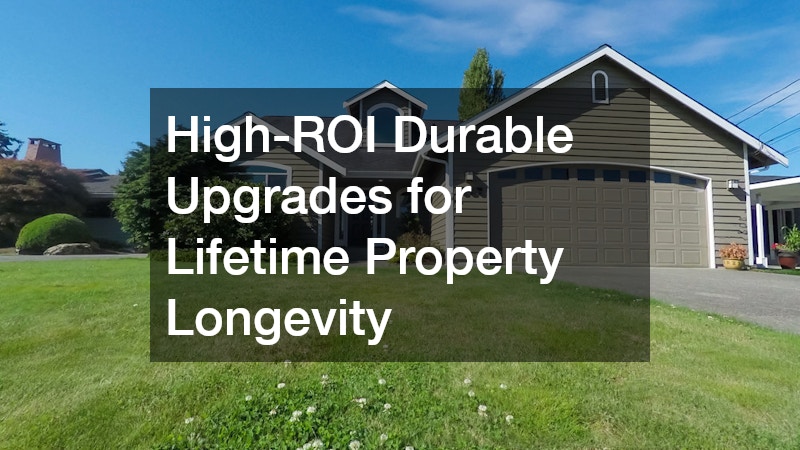
For most people, a home is the single largest financial investment they will ever make. Yet, traditional homeownership models often trap individuals in a reactionary cycle of home improvement—waiting for something to crack, leak, or fail before staging an intervention. Shifting your mindset toward lifetime property longevity means abandoning temporary fixes in favor of structural fortresses.
Investing in high-durability upgrades upfront does more than just elevate your daily living experience. It halts the compounding damage that occurs when minor issues, like hidden moisture or slight soil shifts, are left to fester. By viewing every renovation through the lens of structural resilience, you can effectively immunize your property against extreme weather, reduce annual recurring maintenance costs, and preserve your equity for generations to come.
Optimizing Shingle Choice and Underlayment Subsystems
The roof is your home’s primary shield against atmospheric elements, bearing the brunt of solar radiation, torrential rains, and heavy snow loads. When building a roof designed to last for half a century, the visible shingles are only one part of a complex system. True longevity requires a multi-layered defense mechanism that starts with the decking and underlayment.
-
Class 4 Impact-Resistant Shingles:
Traditional asphalt shingles easily crack or lose protective granules during hail storms. Upgrading to Class 4 rated shingles—often reinforced with SBS (styrene-butadiene-styrene) polymer-modified asphalt—provides rubberized flexibility that allows the material to absorb impact without fracturing. -
Synthetic Underlayment:
Standard felt paper tears easily and degrades rapidly when exposed to moisture. Heavy-duty synthetic polymer underlayments offer superior tear strength, resist rot, and provide a secondary waterproof barrier across the entire roof deck. -
Ice and Water Shields:
In colder climates, freeze-thaw cycles create ice dams at the eaves. Installing a self-adhering, rubberized asphalt membrane along the valleys and lower edges creates an impenetrable seal around nail penetrations, stopping backed-up water from reaching the interior.
To maximize the lifespan of premium materials, proper attic ventilation calculations are essential. Without adequate airflow, summer heat builds up in the attic, damaging shingles and causing premature curling and blistering. An experienced roofing contractor will ensure intake vents at the soffits balance with exhaust ridge vents. This balance maintains attic temperatures near outdoor conditions, preventing moisture accumulation in winter and heat degradation in summer.
Eliminating Water Traps with Engineered Drainage
A durable roof is practically useless if the water it sheds is allowed to pool along the fascia board or collect around the foundation. Standard sectional gutters are notorious failure points; their seams catch organic debris, leading to clogs, standing water, and eventual rust or sagging.
-
Continuous Water Flow Path:
Water flows from the roof eave directly into a seamless gutter run, moving efficiently to oversized downspouts before discharging into an underground drain pipe that carries water to a safe discharge zone far from the house. -
Seamless Gutter Integration:
Transitioning to continuous aluminum or copper channels eliminates the seams entirely, leaving only clean runs that expand and contract smoothly with temperature fluctuations. Working with an installer who specializes in seamless gutters ensures that the system is custom-extruded on-site to match the exact dimensions of your roofline. -
Oversized Downspout Upgrades:
You must size your downspouts to handle regional rain intensity. Upgrading from standard 2×3-inch downspouts to oversized 3×4-inch configurations increases water displacement capacity exponentially, preventing the overflowing that rots structural wood fascia boards and erodes the landscaping below.
Designing Structural Driveways to Resist Cracking and Heaving
The ground surrounding your home is subject to immense weight and constant movement. Driveways and main entry paths endure thousands of pounds of rolling vehicular weight daily, meaning poor groundwork will rapidly manifest as unsightly cracks, potholes, and sinking slabs. Building a concrete driveway that lasts for forty years or more requires meticulous engineering beneath the surface layer.
-
Surface Finish:
The top layer consists of stamped or broomed high-PSI concrete that provides traction and aesthetic appeal while resisting surface wear. -
Tensile Reinforcement:
Inside the concrete sits a heavy-duty grid of tied steel rebar elevated on structural chairs, which keeps the slab bound together under heavy vehicle loads. -
Sub-Base Layer:
Beneath the concrete, a four-to-six-inch layer of crushed stone provides a solid foundation and allows water to drain away freely. -
Geotextile Fabric Buffer:
A layer of woven geotextile fabric separates the stone base from the native subgrade, preventing fine dirt from mixing into the rock and compromising the foundation.
Heavy-Duty Materials for Longevity and Curb Appeal
In regions with severe freeze-thaw cycles or heavy traffic, choosing the right surfacing material is crucial for durability. Asphalt is flexible initially but needs frequent seal coating and is prone to UV and oil damage. High compressive strength concrete (at least 4,000 PSI) offers a more permanent solution.
Working with professional paving companies helps assess the soil of your site, ensuring the aggregate mix and thickness are suited to local weather. Additionally, using a premium silane-siloxane penetrating sealer every few years is essential. This sealer creates a hydrophobic barrier to block moisture, road salt, and automotive fluids, preventing winter spalling.
Upgrading Perimeter Glazing for Thermal and Structural Efficiency
The openings in your home’s envelope are historically its weakest points structurally and thermally. Windows act as thin barriers against wind, rain, and heat transfer. Upgrading to high-performance windows improves your home’s security while substantially reducing energy expenses over time.
-
Multi-Pane Gas Fills:
Single-pane glass offers almost no insulation. Modern double- or triple-pane units filled with dense, non-reactive argon or krypton gas significantly slow down heat transfer, keeping your home insulated from outdoor temperature extremes. -
Low-E Coatings:
Microscopically thin metallic oxide layers applied to the glass surfaces reflect infrared heat while allowing visible light through. This keeps indoor heat inside during the winter and reflects blazing solar heat away during the summer. -
Fiberglass and Composite Framing:
While wood rots and vinyl can warp under intense sun exposure, fiberglass frames expand and contract at virtually the exact same rate as the glass panes themselves, preserving the integrity of the factory seals. -
Thermal Envelope Action:
Incoming solar heat and destructive UV rays are intercepted at the window surface by the low-E coating, which bounces the thermal energy back outdoors, while the internal argon gas layer keeps interior temperatures perfectly regulated.
When scheduling window replacement services, pay careful attention to the flashing around rough openings. Advanced window units can fail if water sneaks behind the frame. Proper sill pan installation and self-healing flashing tapes guide water back outside, preserving your walls from hidden dry rot.
Hardening Overhead Entryways Against Mechanical Failure
The largest moving component of your home is almost certainly your garage door. Because it functions as an entire moveable wall, it is highly vulnerable to wind pressure and mechanical fatigue. A flimsy, uninsulated door can bow during severe windstorms, pulling free from its tracks and exposing your home’s structural framing to catastrophic internal pressurization.
-
High-Gauge Steel Construction:
Choose a door crafted from multi-layer steel with a dense polyurethane foam core injected between the layers. This provides exceptional rigidity and thermal insulation. -
High-Cycle Torsion Springs:
Standard garage door springs are rated for roughly 10,000 cycles. Upgrading to heavy-duty, oil-tempered torsion springs increases that lifespan to 25,000 or 50,000 cycles, preventing sudden mechanical failures that leave your home vulnerable. -
Heavy-Duty Track Systems:
Thick, galvanized steel tracks paired with ball-bearing rollers coated in nylon ensure smooth, quiet operation while resisting deformation under high wind loads.
To ensure this machinery operates flawlessly for decades, establish a routine of garage door maintenance. Check the door’s balance, tighten track bolts, and clean the bottom weather-stripping to prevent strain on the electric opener, ensuring an energy-efficient seal against the elements.
Mitigating Foundation Risks Through Strategic Tree and Flora Management
Landscaping should do more than just beautify your yard; it should serve as a functional buffer protecting your home’s structural components. Large trees add immense property value, but their root systems can cause serious structural damage if left unmanaged. As roots expand, they seek out moisture, easily cracking drainage lines and exerting immense hydrostatic pressure against foundation walls.
-
The Canopy-to-Foundation Rule:
As a general rule of thumb, major shade trees should be planted no closer to the foundation than their mature canopy width. This ensures that both the root zone and heavy falling branches remain safely away from your living structures. -
Subsurface Root Barriers:
If large trees already sit close to your home, installing physical barriers—such as deep sheets of high-density polyethylene—diverts roots downward and away from your foundation footings. -
Pruning for Wind Resistance:
Regularly thinning out a tree’s interior canopy allows high winds to pass safely through the branches rather than turning the tree into a sail that can pull up soil or crush your roof during a storm.
When dealing with mature trees showing signs of internal decay, hollow trunks, or co-dominant stems, prompt intervention is essential. Hiring a professional tree removal company to eliminate high-risk trees before severe storm seasons prevents property damage. Proactive tree management safeguards your roof, siding, and underground utilities from sudden, costly failures.
Creating Sustainable Microclimates with Smart Softscaping
Beyond large trees, the general flora and grading of your yard determine how water interacts with your home. The ground should slope downward and away from your foundation at a minimum decline of six inches over the first ten feet. When the natural topography makes this difficult, strategic softscaping can fix the issue.
-
Foundation Slope Mechanics:
Grading the soil with a continuous downward slope away from the home foundation creates a safe runoff path, ensuring water flows downward into a native plant rain garden designed to safely absorb large volumes of stormwater. -
Erosion Control via Vegetation:
By working closely with a certified landscaping company, you can introduce deeply rooted native plants that stabilize slopes, absorb excess stormwater, and prevent soil erosion. -
Targeted Drip Irrigation:
Installing zone-specific drip irrigation ensures your plants get targeted hydration without oversaturating the soil directly adjacent to your home’s foundation walls, keeping basement areas bone-dry year-round.
Retaining Walls and Patios
Creating an outdoor living area that lasts requires a deep understanding of earth management and water migration. Earth retaining structures and paved patios face constant pressure from shifting soils and water runoff. If built incorrectly, retaining walls will bow, tilt, and eventually collapse under the sheer weight of saturated soil.
-
Retaining Wall Base Engineering:
Utilizing clean, angular, crushed stone with zero sand content provides a stable leveling pad that completely prevents the wall blocks from settling unevenly over time. -
Subsurface Wall Drainage:
Installing a perforated PVC drain pipe wrapped in fine filter fabric behind the lower course of blocks relieves hydrostatic water pressure before it can push against the wall. -
Open-Graded Aggregate Backfill:
Filling the space directly behind a retaining wall with clean, open-graded gravel allows water to pass through quickly to the drain pipe, completely eliminating freeze-thaw pressure buildup. -
Patio Surface Sloping:
Grading a patio with a mandatory drop of one inch for every four to eight linear feet ensures surface water actively migrates away from the home’s foundation instead of pooling near the sill plate.
To keep these outdoor spaces pristine for decades, hiring an experienced hardscaping contractor is crucial. A skilled professional knows how to calculate soil pressures and incorporate essential drainage features, like weep holes and gravel backfill zones. These features allow water to escape freely instead of collecting behind the wall and freezing, which can push heavy stone blocks out of alignment.
Low-Maintenance, High-Durability Boundary Enclosures
Perimeter fencing defines your property boundaries, adds security, and serves as a major visual element of your landscape. However, traditional wood fences require frequent staining, warp over time, and face constant exposure to soil moisture, which often leads to ground-level post rot.
-
Modern Composite and Vinyl Enclosures:
High-grade vinyl and wood-plastic composites offer the look of traditional timber without the vulnerability to rotting, splitting, or pest infestations. They clean up easily with a simple pressure wash. -
Powder-Coated Aluminum:
For an elegant perimeter that lasts, aluminum fencing coated in a durable baked-on finish offers the strength of wrought iron without the risk of rust and corrosion. -
Deep Structural Frost Lines:
Fencing posts must be set into holes drilled completely below your local frost line. Encasing the post in a solid concrete pier with a sloped top, and supporting it with a gravel drainage base at the bottom, ensures that water sheds away from the post entry points rather than pooling around the wood or vinyl.
Consulting with professional fence contractors ensures your boundary lines meet local wind codes and soil conditions. Anchoring posts in concrete piers with sloped tops effectively directs water away, protecting your perimeter from wind damage and maintaining level alignment for decades.
Building a home that lasts requires quality materials and smart engineering. Shift your focus from quick fixes to durable, structural upgrades, transforming your home into a resilient sanctuary against weather extremes and aging.
Upgrading roofing drainage, reinforcing driveways, securing efficient doors and windows, and engineering outdoor spaces create a defense system for your property. These investments protect your peace of mind, preserve equity, eliminate costly repairs, and ensure safety and value for decades. Prioritize your property’s vulnerable areas, design upgrades for durability, and enjoy the rewards of a resilient home.